
Yin Yoga and Fascial Health
Why long, quiet stretching does more than relax you — it nourishes the connective tissue that holds you together
Most people come to yin yoga for the obvious reasons: to build flexibility, support athletic recovery, cultivate patience, and reduce stress. And it delivers — yin offers deep relaxation, relieving muscle tension while nourishing the nervous system through stillness. But there's a deeper story in those long, quiet stretches, a broader scope of benefits that doesn't get talked about enough. It has to do with fascia, and once you understand this, you'll never think about yin the same way.
What fascia actually is
Fascia is a connective tissue that forms an interconnected system covering your entire body beneath the skin. Think of it like a wetsuit that covers the whole body — it holds your structures together and provides a framework for muscles to optimally function. Without fascia, your muscles would lack proper support and the coordination to move well. It doesn't just wrap around muscles, either; it penetrates the muscle fibers themselves, transmitting force and maintaining structural integrity throughout.
But here's the part that surprises people: fascia isn't just structural. It's a communication network.
It houses over 250 million sensory nerves — interacting with the skin, supporting nerve and blood flow, and relaying mechanical information about what your body is doing. Fascia contains roughly six times more sensory neurons than most other parts of the body (the skin being the exception), which is why it's increasingly understood as a kind of secondary sense organ — one that influences movement, healing, and tissue repair.
In other words, when you work with your fascia, you're working with far more than "tight muscles."
What yin yoga does to fascia
This is where yin becomes so interesting. Unlike more active practices that target muscles, yin's passive, sustained stretching targets the connective tissues — fascia, along with the ligaments and the areas around the joints.
Like bones, tendons, and ligaments, fascia adapts to mechanical stress — but it responds best to gentle, sustained pressure rather than quick, repetitive movement. This is exactly what yin provides. Holding a pose for minutes at a time lengthens, compresses, or applies a gentle shearing force to the fascial fibers, encouraging the rearrangement of collagen crosslinks and elastin. The result is greater flexibility, increased passive range of motion, and improved tissue hydration.
That hydration piece matters more than it sounds. Well-hydrated fascia reduces friction between collagen fibers, which supports efficient nerve function, healthy blood flow, and better joint health. The stillness of yin is both restful while also providing better tissue health and communication.
A note on the yin tradition and the seasons
Yin yoga also draws on Traditional Chinese Medicine, which offers a complementary lens to Western anatomical list of benefits mentioned above. In this tradition, different poses and the earth's seasons are associated with the body's meridians and elements. For example, in spring, certain poses are linked to the liver and gallbladder meridians and the "wood" element — associated with growth and renewed purpose as the body emerges from winter.
You don't have to subscribe to the TCM framework to benefit from yin, but for many practitioners this seasonal, energetic layer adds richness and intention to the practice.
Five yin poses that support fascial health
A starting point — modify any of these as your body needs, and use props generously:
Deer (90/90 stretch) — Supports digestion and can ease menopause symptoms and pregnancy-related swelling.
Half Butterfly (a variation of Janu Sirsasana) — Targets the back, hamstrings, inner thigh, and groin; support the lower back if needed.
Cat Pulling Its Tail — Opens the quads, stimulates the lymphatic system, and supports fuller breathing.
Supported Frog — Stretches the inner thighs and groin; place a bolster underneath you and adjust for any knee, hip, or ankle discomfort.
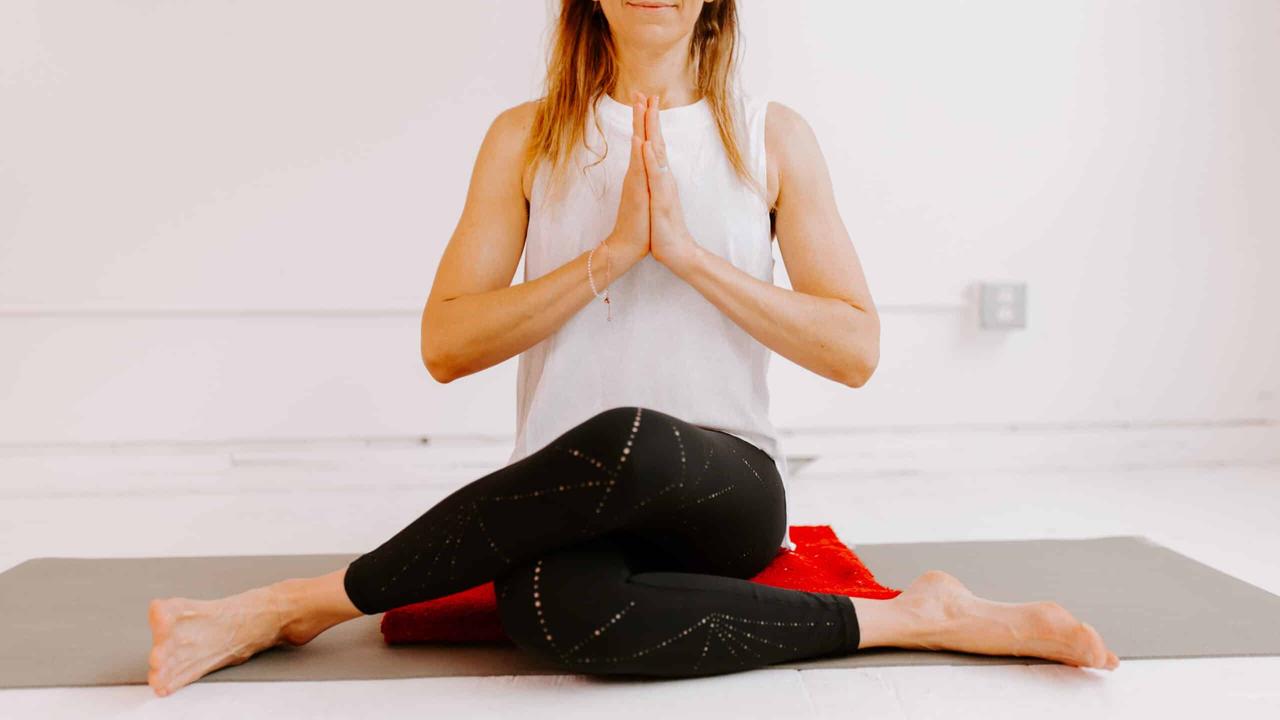
Shoelace (Gomukasana variation) — A deep hip opener; use support under the seat or for any lower-back concerns.
How to practice yin well
A few key principles make the difference between yin that nourishes and yin that strains:
Enter at an appropriate depth — around 60–70% of your maximum stretch, not your edge.
Then be still. Stillness is what encourages fascia to rehydrate and the nervous system to settle.
Hold for 2–10 minutes, using props as needed so the muscles can fully relax.
Never practice into pain. Poses should feel supportive and lead you toward a calm, meditative state — never sharp or forced.
Balance is the whole point
Yin (cooling, quiet, receptive) is most powerful when balanced with yang (heating, active, dynamic) practices. Together they foster a sense of internal balance and overall wellbeing. Adding yin to your routine supports flexibility, hydration, and nervous system function — a quietly profound contribution to whole-body health.
If you'd like to explore yin yoga or build a practice tailored to your body and goals, I offer 1:1 private therapeutic yoga sessions. Reach out!